If Your Managers Aren’t Equipped to Manage Their Teams, They Cannot Manage Your Change
Every major organizational initiative eventually reaches the same place — the manager. Yet organizations keep piling change on top of a layer that hasn’t been equipped to manage in the first place. Manager capability IS change capability.
Every major organizational initiative eventually reaches the same place: the manager.
You can build the strategy. Select and implement the technology. You can create the communication plan and training materials, build the FAQs, create the leadership talking points, and build the rollout calendar. But eventually, someone on a team is going to ask: What does this actually mean for me? What am I supposed to do differently? Is this really a priority? How does this affect everything else I’m already responsible for?
Majority of the time, they aren’t asking the CEO. They’re asking their manager.
That matters because managers aren’t simply another audience impacted by organizational change. They are the layer through which much of the organization actually operates. Gallup estimates that managers account for at least 70% of the variance in team-level employee engagement. Managers create context. They reinforce priorities. They answer questions. They notice when something isn’t working. They manage performance. They make decisions about what gets attention when ten things are competing for it. They translate what leadership said to what it actually means to their people — or they don’t.
That’s where I think we have a significant organizational problem. We’re asking managers to carry change without first equipping them to manage. The 2025 CIPD Good Work Index found that only 60% of managers said they had the training and information they needed to manage their staff well. Just 59% said they had the time. Meaning roughly four in ten managers are telling us they don’t have one of the most basic things required to do the job well — the preparation, information, capacity. But still, when transformation happens, we pile yet another responsibility onto that same layer: now manage the change, too.
After roughly 15 years working in change management and organizational transformation, I’ve seen three problems show up again and again, and again and again.
1. We implement solutions before we’re clear enough about the problem.
I’ve worked around more technology implementations than I can count at this point. New platforms, systems, tools, processes, new ways of working — and sometimes, actually regularly, far into the implementation, it is still difficult to get a simple answer to: What problem are we actually solving?
Technology can absolutely make work better, but technology cannot compensate for unclear strategy, broken processes, competing priorities, poorly defined roles, or decisions nobody wants to make. When those things aren’t addressed first, the implementation itself starts becoming the work. And here is the ripple of that: managers inherit the confusion. They’re expected to explain why the new process matters, reconcile it with existing priorities, and answer questions the project itself hasn’t fully answered.
2. Leaders announce the change and then hand it off.
Senior leaders have an essential role during change — every change professional knows this. Yet it is still ridiculously common. Employees need to understand why the organization is changing, why now, what happens if it doesn’t, and how the change connects to the broader direction of the business. That context must continue coming from leadership.
But too often, leadership involvement peaks at the announcement. There’s a town hall — maybe, if you’re lucky, an email goes out. Possibly a slide deck attached for a little more context. Then the organization quietly expects managers to take it from there.
The ripple continues: managers cannot create organizational context they were never given. They cannot confidently reinforce decisions they don’t understand, and they cannot answer questions about tradeoffs, priorities, and direction when those decisions sit several levels above them. Leadership cannot announce change and outsource the rest of the leadership of it.
3. Managers are left holding enormous responsibility without the authority, context, capacity, or support to carry it.
This is the part I think organizations underestimate most (or sometimes just refuse to acknowledge or change).
During change, managers are expected to:
- explain what is happening
- translate what it means for their team
- answer questions
- listen to concerns
- manage resistance
- maintain productivity
- reinforce new behaviors
- identify adoption issues
- send feedback upward
- keep morale intact
- continue managing performance
- and somehow keep all of the regular work moving too
Sometimes while they themselves are still trying to understand the change.
We call managers “change leaders” or “change agents,” but then give them a communication toolkit three days before launch and assume they’re ready. That’s not enablement. And the problem starts even earlier.
If someone has never been taught how to create clarity, set expectations, prioritize work, hold people accountable, coach performance, communicate decisions, or understand the individual people on their team — how exactly are they supposed to suddenly do all of those things under the added pressure of organizational change?
You cannot build advanced change capability on top of missing management fundamentals. Manager capability is change capability.
I increasingly believe this is one of the most overlooked investments organizations can make. We tend to treat management development, organizational change, employee engagement, culture, and business transformation as separate disciplines. But here’s the thing: employees don’t experience them separately. They experience all of them through the day-to-day reality of work, and so much of that reality is shaped by their manager.
Gallup’s finding that managers account for at least 70% of the variance in team engagement isn’t just a management-development statistic. It’s a transformation statistic. Managers are the connective tissue between organizational intent and individual action.
So before asking: How do we make our managers better change leaders?, I think organizations need to ask an earlier question: Have we actually equipped them to be managers?
If the management development strategy has largely been promote and hope, no change-management framework is going to magically fill that gap. If we want managers to carry strategy, culture, and change through an organization, we have to stop treating their capability as optional infrastructure.
If your managers aren’t equipped to manage their teams, they cannot manage your change.
Want help supporting your people managers in fulfilling their role?
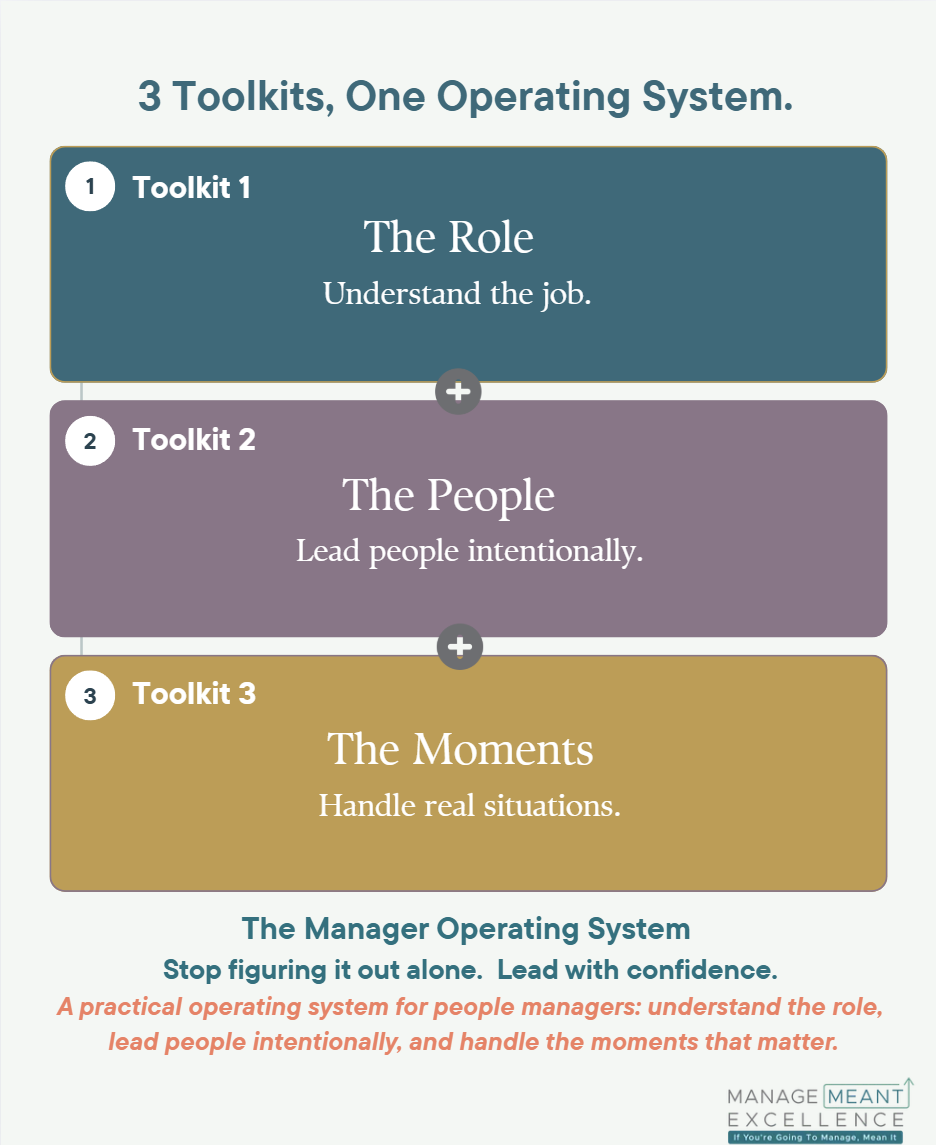
Start here: The Manager Operating System →
Managers don’t just need another leadership concept or a one-time training. They need practical support for the whole reality of the role — understanding what they’re responsible for, managing the people on their team, and navigating the real moments that inevitably come up.
The Manager Operating System brings that support together in one place: practical tools, guidance, and language managers can actually use while they’re doing the job.
Better change doesn’t start with asking managers to carry more. It starts with equipping them to manage in the first place.
Get the newsletter.
Practical management, in your inbox.
New posts, manager resources, and the occasional honest note — no fluff, unsubscribe anytime.